Richis Tree Service, LLC
Why Stump Grinding in Centennial Matters More Than You Think
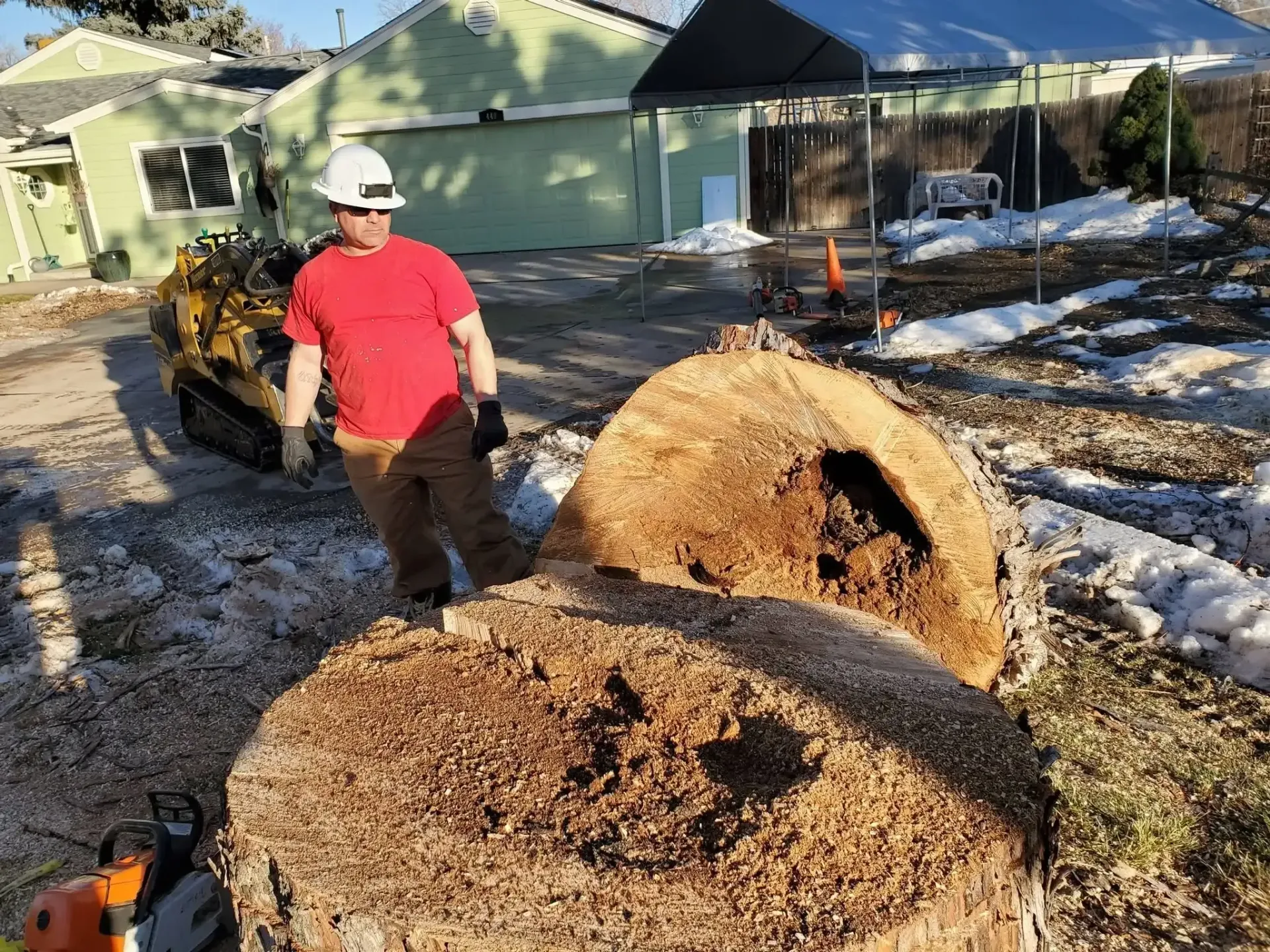
That old stump is not simply taking up space. It can become a tripping hazard, damage lawn equipment, attract insects that use decaying wood, and keep you from fully enjoying your yard.
Professional stump grinding in Centennial removes the main obstacle before it creates years of frustration. At Richis Tree Service, LLC, we have seen homeowners ignore a small stump only to deal with constant sprouts, difficult mowing, fungal growth, and landscaping limitations later.
For homeowners in
Centennial, Englewood, Highlands Ranch, Greenwood Village, and nearby communities, grinding a stump is often the final step needed to truly finish a tree removal project.
Why Does Stump Grinding Matter?
Stump grinding makes your property safer, cleaner, and easier to maintain. It also gives you back an area that would otherwise remain unusable while the stump slowly decays.
A leftover stump can:
- Trip family members, visitors, or contractors
- Damage lawn mower blades and other equipment
- Interfere with fences, irrigation, and landscaping
- Produce repeated shoots or suckers
- Provide habitat for insects and fungi
- Make an otherwise maintained yard look unfinished
Our professional stump grinding service reduces the stump below the surrounding ground level without the major soil disruption involved in digging out the entire root system.
What Problems Can an Old Stump Cause?
An old stump can create problems above and below the surface, even when it looks harmless.
The longer it stays, the more time it has to decay, sprout, and interfere with your property.
Safety and Lawn-Care Problems
Low stumps can disappear under grass, leaves, or snow. That makes them easy to trip over and difficult to avoid with a mower.
Surface roots can also lift soil, edging, or nearby hardscape. Removing the visible stump does not solve every root issue, but it eliminates the main obstacle and makes the area easier to inspect and maintain.
Insects and Decaying Wood
Carpenter ants and some other insects use damp or decaying wood as nesting material. According to Colorado State University Extension’s carpenter ant guidance, outdoor nests may occur in stumps, trees, landscape timbers, and firewood.
A stump does not automatically cause insects to enter your home. However, removing deteriorating wood near decks, fences, and structures can eliminate one potential nesting location.
Fungi and Unwanted Growth
Mushrooms and other fungal growth may appear as the stump breaks down. Some tree species also continue sending up shoots from the stump or remaining roots.
Cutting those shoots only treats the visible symptom. Grinding the stump removes the central woody structure that supports much of the recurring growth.
If the tree showed unusual thinning, discoloration, dead branches, or other symptoms before removal, review these signs that a tree may be diseased. Nearby trees may need attention too.
Why Centennial Homeowners Should Act Promptly
Centennial’s dry climate does not make a stump disappear quickly or prevent it from causing problems. The wood may remain in place for years while becoming softer, developing cavities, or producing new shoots.
Local homeowners should be especially careful when a tree was removed because of disease or insect damage. Emerald ash borer remains a concern along Colorado’s Front Range, and larvae may survive in bark-bearing ash wood. The Colorado State Forest Service’s emerald ash borer guidance advises homeowners not to transport untreated ash wood. Infested branches, logs, and other woody material should be processed or disposed of appropriately.
The primary EAB concern is untreated ash material that still has bark. You should not assume that every ash stump contains active insects, but a tree removed because of suspected infestation deserves careful handling.
When needed, we can help coordinate tree removal services, stump grinding, and site cleanup so the project does not stop with an unfinished stump.
Signs Your Stump Is Becoming a Problem
A stump needs attention when it creates a hazard, shows active decay, keeps sprouting, or blocks your plans for the yard.
Look for these warning signs:
- Soft or crumbling wood
- Mushrooms or shelf-like fungal growth
- Ant trails near the stump
- Sawdust-like material around holes or loose bark
- Repeated shoots from the stump or surrounding soil
- Cavities developing in the wood
- Roots lifting soil, pavers, or edging
- Difficulty mowing or walking around the area
- A stump close to a walkway, fence, deck, or play space
One sign does not always mean you have a serious pest or disease problem. It does mean the stump is changing and may be easier to address now than after more decay or landscaping work occurs.
How Professional Stump Grinding Works
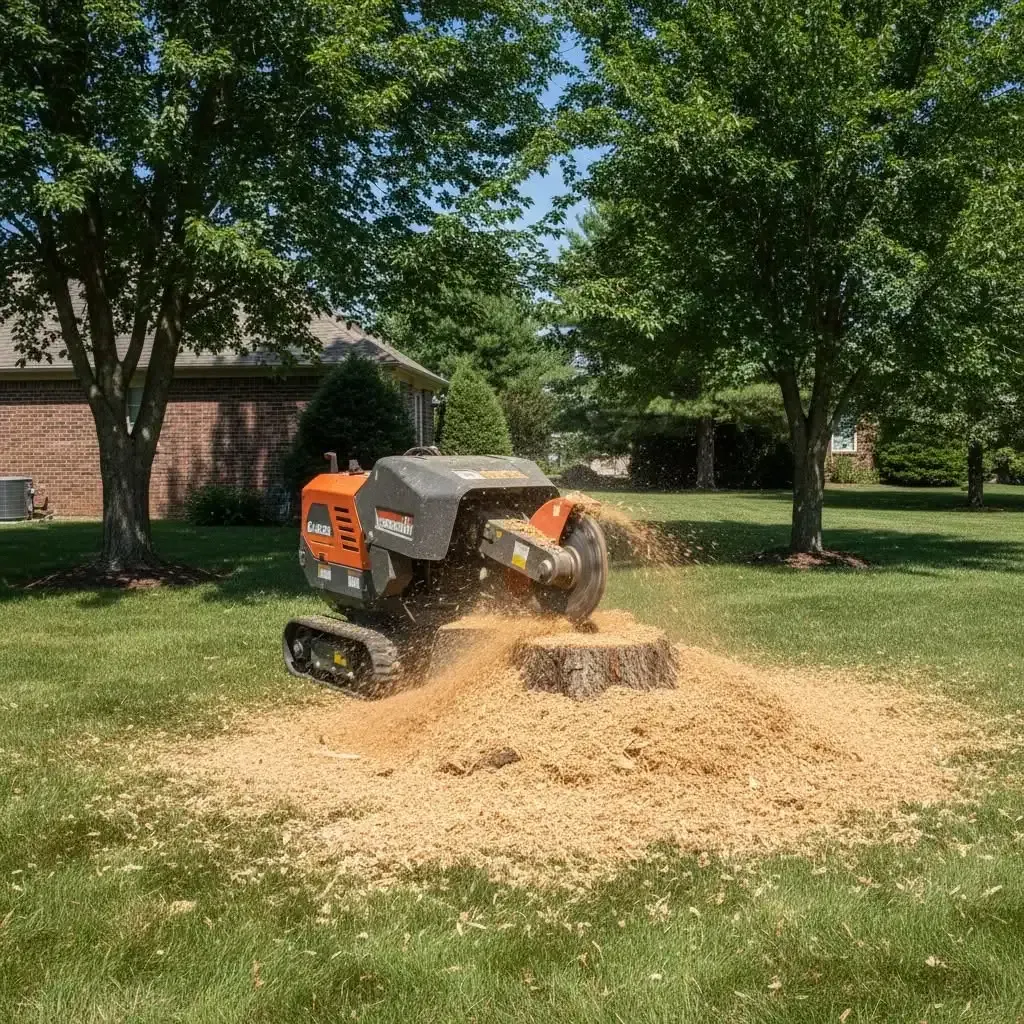
Professional stump grinding uses a powerful cutting wheel to turn the visible stump and root flare into small wood chips. The stump is ground below the surrounding grade so the area can be leveled and reused.
A typical appointment involves the following steps:
- Inspecting the site: We evaluate access, slope, nearby plants, structures, irrigation components, and visible roots.
- Checking for underground conflicts: Public utilities and private lines may need to be identified before work begins.
- Preparing the work area: Rocks, decorations, furniture, and movable obstacles are cleared away.
- Grinding the stump: The machine removes the stump to a depth appropriate for the site and your future plans.
- Managing the wood chips: Chips may be removed, left to settle, or used as surface mulch when appropriate.
- Preparing the area for its next use: The remaining space can be filled, graded, seeded, or incorporated into a new landscape plan.
Grinding depth depends on the stump’s size, surrounding utilities, soil conditions, access, and whether you plan to install grass, a garden bed, or another feature. Our guide to stump grinding and property appearance explains how the process can improve both function and curb appeal.
Stump Grinding vs. Leaving the Stump
Stump grinding can remove the main above-ground obstacle in one service visit. Leaving the stump means continuing to work around it while nature breaks it down on an unpredictable schedule.
| Consideration | Leave the Stump | Grind the Stump |
|---|---|---|
| Yard safety | Remains a trip and mower hazard | Main obstacle is removed |
| Insect habitat | Decaying wood remains available | Most stump wood is eliminated |
| Sprouting | May continue | Usually reduced significantly |
| Landscaping | Area remains difficult to use | Area can be filled and graded |
| Appearance | Yard may look unfinished | Creates a cleaner surface |
| Roots | Remain underground | Also remain and decay gradually |
| Disruption | No immediate work | Less disruptive than excavation |
Leaving a stump may seem like the cheaper choice today. However, the repeated mowing difficulties, sprout removal, lost space, and future cleanup can make it an ongoing expense in time and effort.
What Happens to the Roots?
Most roots stay underground after grinding and decay naturally over time. Removing every root would require extensive excavation that could disturb soil, landscaping, irrigation, and nearby utilities.
Additional root work may be appropriate when roots:
- Damage a walkway, driveway, or foundation
- Interfere with planned construction
- Block irrigation or utility work
- Continue producing aggressive shoots
- Create major surface hazards
Our article about why roots remain after tree removal explains when leaving them is reasonable and when further removal may be needed.
Can You Replant After Stump Grinding?
You can often install grass or shallow-rooted plants after the area is cleared and filled with suitable soil. Planting a new tree in exactly the same location may require more planning.
Old roots, remaining wood chips, soil settling, and the reason the previous tree failed can all affect a replacement tree. In many cases, moving the new tree a few feet away provides better soil and more growing space.
A tree care professional can help you decide whether to replant, establish turf, create a flower bed, or use the space for another landscape feature.
When Should You Schedule Stump Grinding?
Schedule stump grinding promptly when the stump is hazardous, actively sprouting, deteriorating, or interfering with another project. Acting early keeps a small inconvenience from becoming a long-term yard problem.
Prompt grinding makes sense when:
- Children or pets regularly use the yard
- The stump sits near a walkway or driveway
- You need to mow around it
- The tree was removed because of disease or insects
- You are preparing to install sod, irrigation, or fencing
- The stump prevents a planned landscape improvement
- You want to improve the property’s appearance before selling
Before the appointment,
remove decorations and furniture from the area.
Identify sprinkler heads, invisible fencing, drainage lines, or other private systems that may not be marked by a utility service. For ideas on what to do next, read our guide to reclaiming your yard after tree removal.
Reclaim Your Yard With Stump Grinding in Centennial
A stump may look harmless today, but it can keep taking up space, creating hazards, and complicating your landscaping for years. Removing it now gives you a safer yard, a cleaner appearance, and more freedom to decide what comes next.
Richis Tree Service, LLC provides stump grinding and complete tree care for homeowners in Centennial, Englewood, Highlands Ranch, Greenwood Village, and surrounding communities. We use professional equipment and practical site planning to remove unwanted stumps while protecting the areas around them.
Call
(720) 987-5606 to schedule a stump grinding assessment and take back the part of your yard that the old tree left behind.
FAQs About Stump Grinding in Centennial
How soon after tree removal should I schedule stump grinding?
You can usually schedule it soon after the tree comes down. Prompt service is especially helpful when the tree was diseased, the stump creates a safety hazard, or you need the space for landscaping.
Will stump grinding damage my lawn?
Some equipment access and surface disturbance are unavoidable. A professional crew will evaluate gates, slopes, irrigation, nearby plants, and the travel route to minimize unnecessary lawn damage.
Will grinding stop the stump from growing back?
Grinding usually stops growth from the main stump, but some tree species may continue producing shoots from remaining roots. Those shoots can be monitored and treated if they appear.
Can I use the leftover wood chips?
Wood chips may be useful as surface mulch around appropriate plants. Avoid mixing a large amount directly into planting soil, and ask about disposal if the original tree had a serious pest or disease.
Does Centennial offer resources for ash-tree replacement?
The City of Centennial has offered programs related to ash-tree removal and replacement. As of July 2026, the city states that its 2026 Tree Program is complete and advises residents to check again in early February 2027. Review the current Centennial Tree Program information before making a purchase or applying for assistance.
SHARE THIS ARTICLE
Recent Posts